By Michael R. · Updated 2026-08-22 · 13 min read
When you search "what is IPTV TV," you're almost certainly weighing it against the cable service you already have. That's exactly what this guide helps you decide.
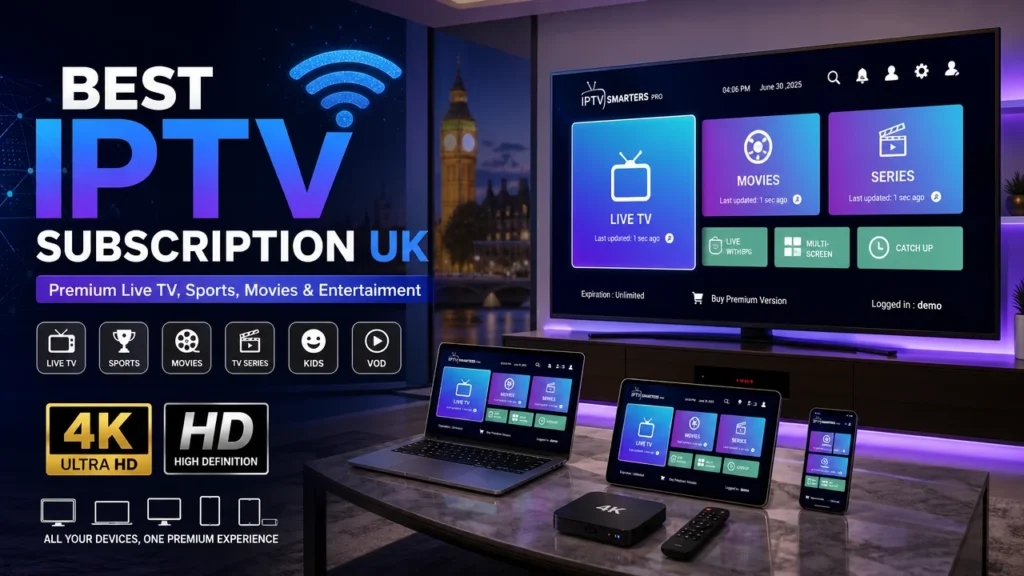
IPTV (Internet Protocol Television) delivers live TV channels, on-demand movies, and sports broadcasts over your internet connection instead of through coaxial cables or satellite dishes. Rather than a cable box decoding broadcast signals, IPTV uses apps on devices like Amazon Firesticks, smart TVs, and smartphones to stream content directly to your screen. The image above shows a typical IPTV dashboard where live channels, sports, and on-demand titles all live in one place.
The comparison that matters isn't just "IPTV vs cable TV" on paper. It's about which option fits your actual viewing habits, monthly budget, and tolerance for technical setup. This guide breaks down both options honestly — no hype, no fluff — so you can make a decision that actually works for you.
The Choice Problem: Why You're Stuck Between IPTV and Cable
Most people land here because they're frustrated with cable bills that keep creeping upward. The average cable package now costs well over $100 per month, and promotional prices expire after a year, leaving you with a much higher bill. Meanwhile, IPTV services advertise hundreds of channels for a fraction of that cost.
But the decision isn't purely financial. It involves questions about reliability, legality, device compatibility, and how much configuration you're willing to handle yourself. Some people want a zero-fuss experience where everything just works out of the box. Others want maximum channel selection at the lowest possible price and don't mind spending ten minutes setting up an app.
This is the fundamental trade-off: IPTV gives you more for less money, but it asks for more technical involvement. Cable gives you simplicity, but at a premium price. Understanding where you sit on that spectrum is the first step toward making the right call.
Criteria That Actually Matter When Comparing
Before diving into the comparison, you need to know what to evaluate. These five criteria will make or break your streaming experience:
- Monthly cost — What you pay every month, including hidden fees like equipment rental and broadcast surcharges.
- Channel selection — How many channels you actually get, and whether they include the ones you watch regularly.
- Reliability — How often you experience buffering, service outages, or degraded picture quality.
- Device compatibility — Which devices the service works on, from Firesticks to smart TVs to phones.
- Setup complexity — How much technical work is required before you can start watching.
IPTV vs Cable TV: Detailed Comparison Table
This table gives you the quick snapshot. But the real story is in the details below. Let's dig into each option.
Option A: IPTV Deep Dive
IPTV has grown in popularity because it fundamentally changed what "watching TV" means. Instead of being locked into a channel lineup dictated by a cable company, you get access to thousands of channels from around the world, including international content, niche sports packages, and premium movie channels — all for a fraction of cable's price.
How does IPTV work? The service uses your internet connection to deliver video content in real time. When you select a channel, the IPTV server sends that stream directly to your device using Internet Protocol (IP) packets. This is the same technology that powers Netflix and YouTube, but optimized for live television. The key difference is that IPTV streams are delivered as a continuous broadcast rather than on-demand files, which is why you can watch live sports and news in real time.
For Firestick users specifically, the best IPTV service for Firestick typically comes as an Android APK that you sideload onto the device. Once installed, you enter your subscription credentials and immediately get access to the channel list. Many providers also offer dedicated apps for smart TVs, Android boxes, and even iOS devices, so you're not locked into a single platform.
✓ Benefits & Pros
Significantly lower monthly cost ($10–$30 typical)
Massive channel selection (1,000–10,000+ channels)
No contracts — cancel anytime
Works on Firestick, Smart TV, phone, tablet, and computer
4K and HDR streaming when your internet supports it
Global channel access
✗ Limitations & Cons
Requires stable internet (25+ Mbps recommended)
Some services operate in a legal gray area
Quality varies between providers
No 911 emergency services bundled
Customer support can be inconsistent
RECOMMENDED RESOURCE
what is iptv tv
Unlock complete high-definition information instantly here.
Explore what is iptv tv Plans →Option B: Cable TV Deep Dive
Traditional cable TV has been around for decades, and there's a reason it's still going. It works. You plug in the box, turn on the TV, and it just works — no configuration, no buffering, no troubleshooting. For many people, that reliability is worth the premium price.
Cable TV uses coaxial cables to deliver television signals directly to your home. The signal is always on, and it doesn't depend on your internet connection. This means no buffering, no dropped streams, and no "your internet is too slow" messages. It's the same reason why cable remains popular in rural areas where high-speed internet isn't available.
However, cable TV's limitations are becoming harder to ignore. The channel selection is limited compared to IPTV, the price keeps rising, and you're locked into contracts that penalize early cancellation. Plus, you can't watch your cable channels on your phone or tablet unless you use a separate streaming app, which often requires additional authentication.
✓ Benefits & Pros
Reliable, consistent picture quality
No internet connection required
Professional installation available
Bundled packages with internet and phone
Local channels included
Customer support via phone or in-person
✗ Limitations & Cons
Expensive ($60–$150+ per month)
Limited channel selection (200–500 channels)
Long-term contracts with early termination fees
Cable box rental fees ($5–$15 per month)
No access on mobile devices without extra apps
Price increases after promotional period ends
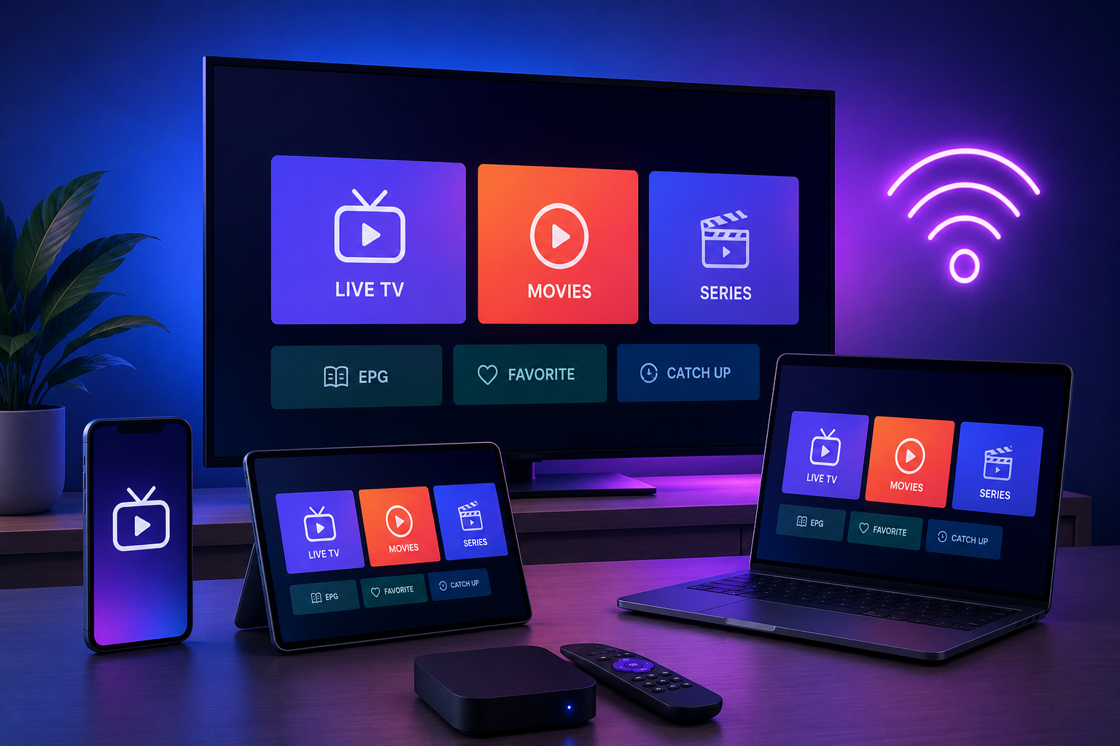
The diagram above illustrates the core technical difference. IPTV breaks video into data packets that travel over your internet connection and are reassembled by your device. Cable TV, on the other hand, sends a continuous analog or digital signal through a dedicated coaxial line. This is why cable doesn't buffer, but also why it costs more to maintain and can't easily deliver content to mobile devices.
Best Option by Budget
If you're on a tight budget, IPTV wins by a wide margin. At $10–$30 per month, you're saving $30–$100+ compared to a typical cable package. Over a year, that's $360–$1,200 in savings. Even if you factor in the one-time cost of a streaming device like a Firestick ($30–$50), IPTV still comes out far ahead.
But budget isn't just about the monthly price. You also need to factor in the cost of a reliable internet connection. If you're already paying for high-speed internet, IPTV is essentially a no-brainer from a financial perspective. If you'd need to upgrade your internet plan to get the required bandwidth, that cost should be part of the equation. In most cases, even with an internet upgrade, IPTV remains significantly cheaper than cable.
Best Option by Experience Level
For tech-savvy users who are comfortable installing apps and troubleshooting minor issues, IPTV is the clear winner. The setup process involves installing an app, entering subscription details, and possibly configuring an electronic program guide (EPG). If you've ever sideloaded an app on a Firestick or installed software on a smart TV, you'll have no problem.
For users who want a plug-and-play experience and don't want to deal with any technical setup, cable TV remains the safer choice. You call the provider, they install the box, and you're done. No apps, no APKs, no configuration. If the thought of "sideloading" makes you uncomfortable, cable is probably the better fit.
Review up-to-date regional server maps and infrastructure.
View the what is iptv tv Platform →Recommendation by User Profile
Here's a practical breakdown of which option works best for different types of viewers:
- Cord-cutters: IPTV is the natural next step after cutting cable. You already understand streaming, and IPTV gives you the channel lineup you miss at a price you'll love.
- Sports fans: IPTV offers more sports packages at lower prices. You can get international sports channels, pay-per-view events, and regional networks that cable often bundles at a premium.
- Families: Cable might be simpler, but IPTV is more economical. If you have kids who watch different channels, IPTV's massive channel selection means everyone gets what they want without add-on packages.
- Tech enthusiasts: IPTV offers more control and customization. You can tailor your channel list, set up parental controls, and integrate with tools like Plex or Emby.
- Senior citizens: Cable may be more comfortable. The familiar interface and professional support are worth the extra cost for many older viewers.
The map above shows how IPTV providers distribute servers across regions. If you're considering an IPTV service, check where their servers are located. Providers with servers close to your area will deliver better performance — lower latency, fewer buffering events, and faster channel switching. This is one of the most overlooked factors when comparing IPTV services, and it can make a huge difference in your daily viewing experience.
Conclusion: Which Should You Choose?
Both IPTV and cable TV have their place. If you value simplicity and reliability above all else, cable TV is the safer bet. The predictable monthly bill, consistent picture quality, and professional support are worth the premium for many households.
But if you want maximum channel selection at the lowest possible price and don't mind a bit of setup, IPTV is the clear winner. The savings alone are substantial — hundreds of dollars per year — and the flexibility of watching on any device is a modern convenience that cable simply can't match.
The choice ultimately comes down to your personal priorities. For the vast majority of viewers who are already paying for internet, IPTV offers dramatically better value. Start with a short-term subscription to test the waters, and if it works for you, the savings will speak for themselves.
Featured Streaming Selection:
Learn more about what is iptv tv →Affiliate Disclosure: Clicking this secure link verified by our network supports our team through standard partnership terms at zero extra cost to your invoice.
Frequently Asked Questions
This article contains affiliate links. Our editorial analysis remains independent.